San Francisco start-up offered $20 an hour to walk robot dogs – and carry them back when they break down
A San Francisco robotics start-up advertised for people to walk its robot dogs for $20 an hour – with the small catch that walkers had to carry any robot that overheated or broke down back to the office.
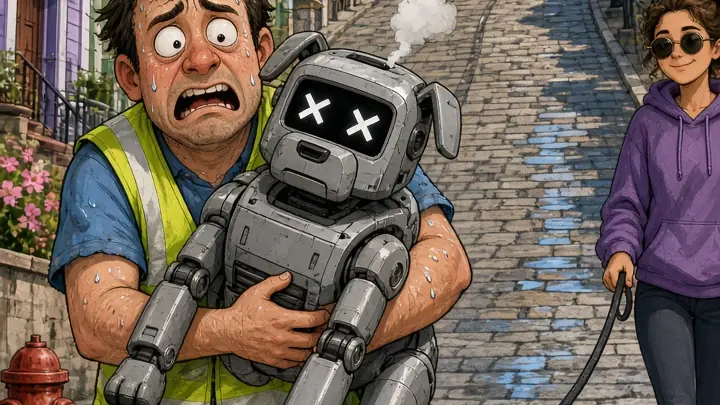
Fancy a job walking dogs around San Francisco for $20 an hour? There is just one catch: the dogs are robots, and if they conk out, you carry them back.
Robotics start-up Dimensional posted the ad in the Bay Area Jobs group on Facebook, looking for people to walk four-legged robots on outdoor routes around the city for four to six hours at a time. No robotics experience was needed, training was paid, and walkers would be paid straight after each shift.
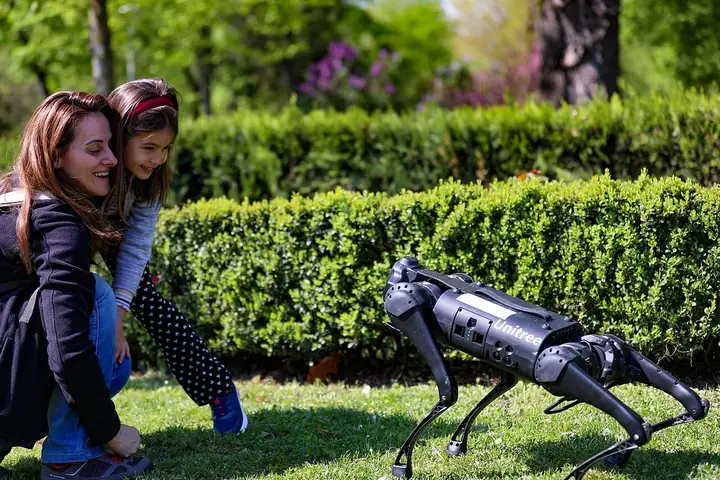 Stock photo: a Unitree Go1 robot dog in a park in Bucharest, 2023 – not one of Dimensional’s. Photo: Sgt. Amber Edwards / U.S. Army / public domain (via Wikimedia Commons).
The small print was the best bit. Applicants had to be comfortable “safely handling equipment weighing about 33 pounds” – about 15kg – because the robots can overheat or simply stop working mid-walk. When that happens, the walker has to carry the machine back to the office.
 AI illustration – not the real walkers or robots. (Spot Gaz, our gorilla, hiding somewhere in this picture.)
The office, fittingly, is in San Francisco’s Dogpatch neighbourhood. The robot dogs are made by the Chinese company Unitree and cost about $2,000 each, and the firm has bought more than 100 robot dogs and 50 humanoid robots, according to The New York Times.
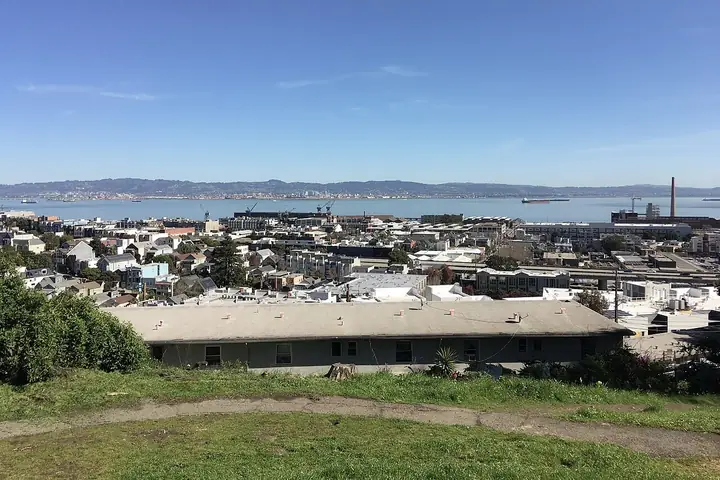 Dogpatch and the bay seen from Potrero Hill, San Francisco, 2025. Photo: Clyde Charles Brown / CC BY-SA 4.0 (via Wikimedia Commons).
So why pay people to walk robots? Dimensional is building an open-source operating system to let AI agents control robots, and human walkers steer the dogs while cameras and sensors gather data. Founder Stash Pomichter told The New York Times: “What we determined from our dog-walking experiment was that agents are still very bad at controlling hardware.” He added: “And humans are still needed in the loop.”
The pay was roughly the going rate for walking real dogs – which, to be fair, rarely need carrying home.
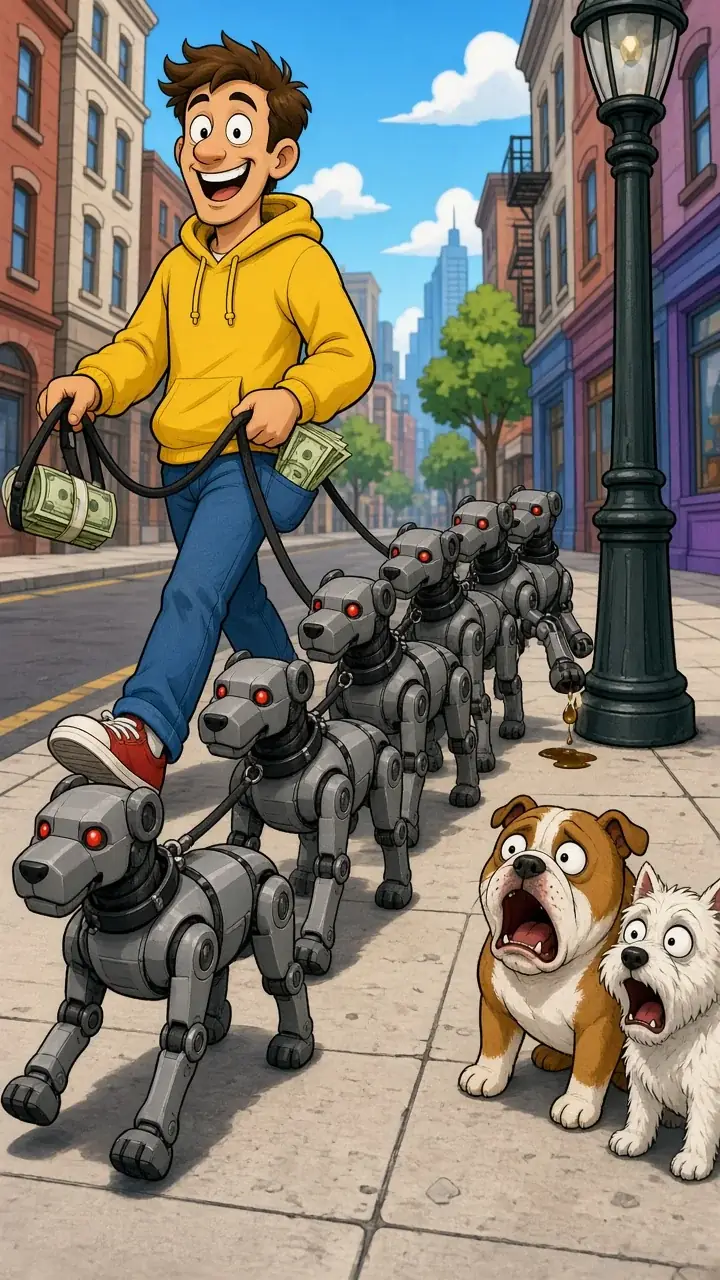 AI illustration – an imagined scene, not the real walkers or robots.
Reported by UPI, with further reporting by Fox Business and Quartz. Originally reported by The New York Times.