Monterey Bay orcas circle a paddleboarder – then bring him a dead sea lion, like a giant cat with a mouse
A paddleboarder in Monterey Bay, California, says two curious killer whales swam rings round his board and presented him with a freshly caught sea lion. Scientists say orcas really do this.
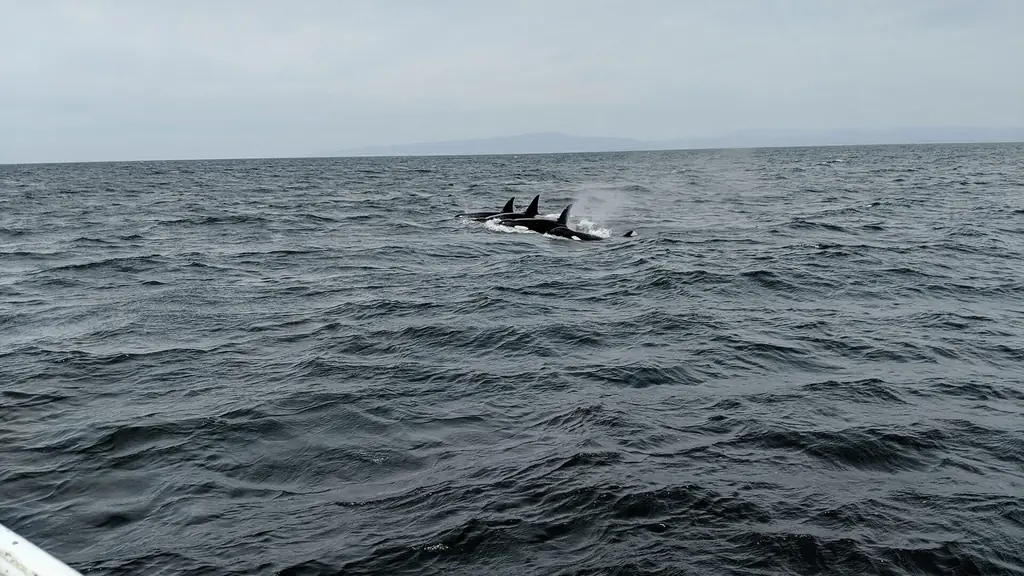
Monterey Bay, California: Most of us would be thrilled if a killer whale simply left us alone. One paddleboarder got the full house-guest treatment instead – two orcas swam laps round his board and then, apparently, offered him dinner.
Bill Clements was paddling in Monterey Bay on 8 November when the pair surfaced to investigate. Video of the encounter, shared online this week, shows the whales circling him again and again, rolling on their sides to get a better look. The smaller of the two had a freshly caught sea lion with it, which Clements says was brought over and presented to him. “These orcas were supremely curious and began their interaction with me by presenting a gift,” he said. He did not, as far as we know, take it home.
Like large puppy dogs (with teeth)
Clements says the visitors were Andi and her two-year-old calf Astrid, from a well-known Monterey Bay family known as Aurora’s pod. Neither tried to tip him in. “They were playful and curious – like large puppy dogs,” he said, adding that his legs were “literally trembling with excitement”.
It sounds like a joke, but it is a real thing. A 2025 study in the Journal of Comparative Psychology logged 34 cases worldwide of wild orcas dropping prey in front of people and then waiting to see what they would do – including, in some cases, trying again after being turned down. Experts say you should never accept, or offer anything back.
The video was filmed on 8 November and published on 23 November 2026.
More animals with ideas above their station: the octopus that chased a robot’s lasers like a cat and the kea parrots car-surfing in New Zealand.
Sources: Surfer, via Yahoo News (Dashel Pierson, 23 November 2026); New York Post (24 November 2026); Fox News / OutKick (24 November 2026); American Psychological Association on the 2025 study (Towers, Visser & Prigollini, doi:10.1037/com0000422).
Image credits: Lead photo (representative, not the whales in the video): MBNMS orcas, Dayna Rignanese / NOAA National Marine Sanctuaries, public domain, via Wikimedia Commons (resized).