Hawaiʻi deep-sea octopus chases scientists' lasers like a cat
323 metres down off Hawaiʻi, a small octopus got the zoomies and chased a research robot's green lasers around the seabed like a kitten with a laser pointer. "It's a cat! It's a cat!" the scientists squealed.
Anyone who has owned a cat knows the drill: wave a laser pointer, and a dignified animal instantly turns into a lunatic. It turns out the same works 323 metres under the Pacific – on an octopus.
Scientists on the Ocean Exploration Trust’s research ship E/V Nautilus were exploring the seabed at St Rogatien Bank in Papahānaumokuākea Marine National Monument, north-west of the main Hawaiian islands, with their remotely operated vehicle Hercules. The ROV shines two green “scaling” lasers on to the seafloor so the team can measure what they see.
A small, camouflaged octopus had other ideas about what the lasers were for. As the dots moved, it scuttled after them and pounced, Discover Wildlife reported – exactly like a kitten with a light toy.
 AI illustration – not the real octopus or crew. (Gorilla Gazette / AI-generated)
Eight legs, nine lives
The control room did not keep it together. “Is it following the lasers?” one scientist asks in the video. “It is chasing the lasers – that’s so cute!” laughs another. And then the line that sums it up: “It’s a cat! It’s a cat! That is the best thing I’ve seen!”
The Nautilus team said the octopus “seemed to have the ‘zoomies’”, and added that its “cat-like curiosity” was a reminder of how intelligent cephalopods probably are. The clip was filmed and posted by Nautilus Live in October and has been doing the rounds again this week.
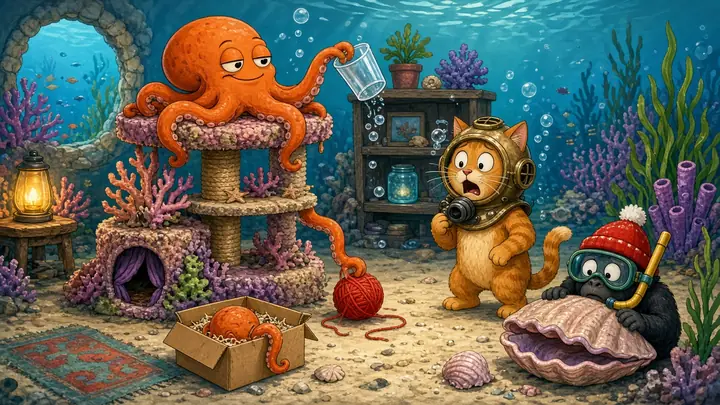 AI illustration of what we assume the octopus does at home – not real animals. Can you spot Gaz? #WheresGaz (Gorilla Gazette / AI-generated)
The Gorilla Gazette view (not news, just us): Cats should be worried. The octopus has eight arms, can change colour, can squeeze through any gap and, it now turns out, also loses its mind over a laser pointer. If one ever learns to knock a mug off a kitchen worktop, it’s game over.
Sources: Discover Wildlife (Melissa Hobson), 17 November 2026 · Nautilus Live / Ocean Exploration Trust, 9 October 2026 · Laughing Squid
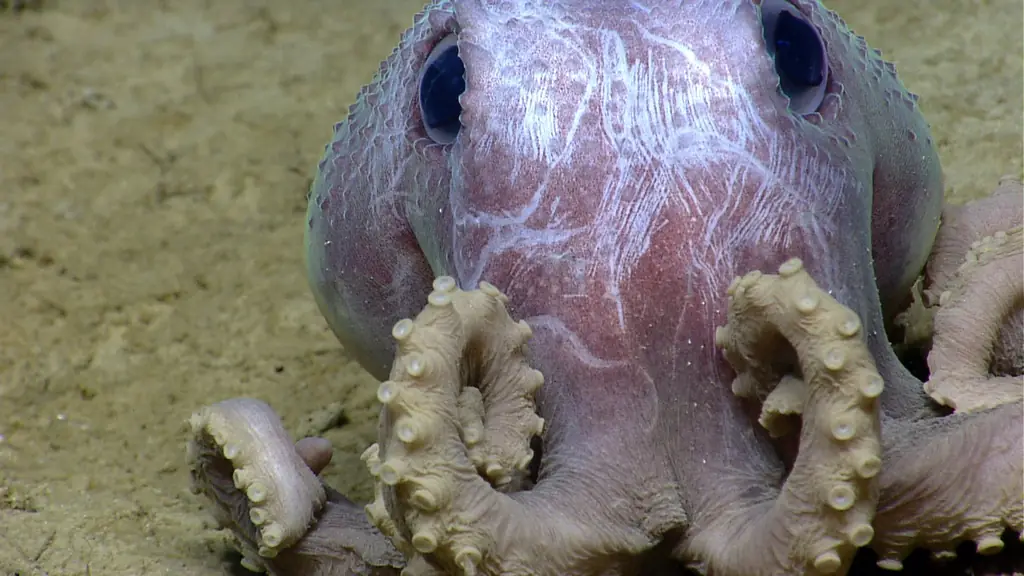
Image credits: Lead photo: Graneledone verrucosa NOAA close, NOAA Okeanos Explorer Program, public domain, via Wikimedia Commons (representative). Illustrations: Gorilla Gazette / AI-generated.