Devon ant heist: England's rarest ants 'stolen' with a spade – up to 5,000 in one nest
A nest of narrow-headed ants – England's rarest ant species – appears to have been dug up and taken from Devon Wildlife Trust's Chudleigh Knighton Heath reserve, the species' last stronghold in England. Police are appealing for information.
Of all the things you could steal from a nature reserve in Devon, somebody appears to have chosen ants. Thousands of them. With a spade.
Devon Wildlife Trust says a nest of narrow-headed ants (Formica exsecta) – England’s rarest ant species – has been taken from its Chudleigh Knighton Heath nature reserve in south Devon. The heath is the species’ last stronghold in England; according to Buglife, only a handful of colonies survive in Scotland, including on the Royal Family’s Balmoral Estate.
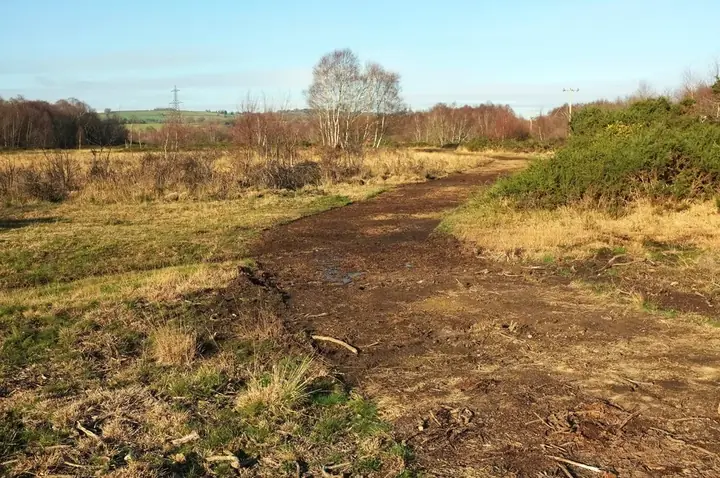 Chudleigh Knighton Heath nature reserve, Devon, in 2019. Photo: Derek Harper / Geograph / CC BY-SA 2.0 (via Wikimedia Commons).
Conservation researchers on their regular checks in mid-October found a hollow where a known nest had been, with “clear signs of digging with a spade”. A single nest can hold between 1,000 and 5,000 ants, plus one or more breeding queens that can live for up to 25 years.
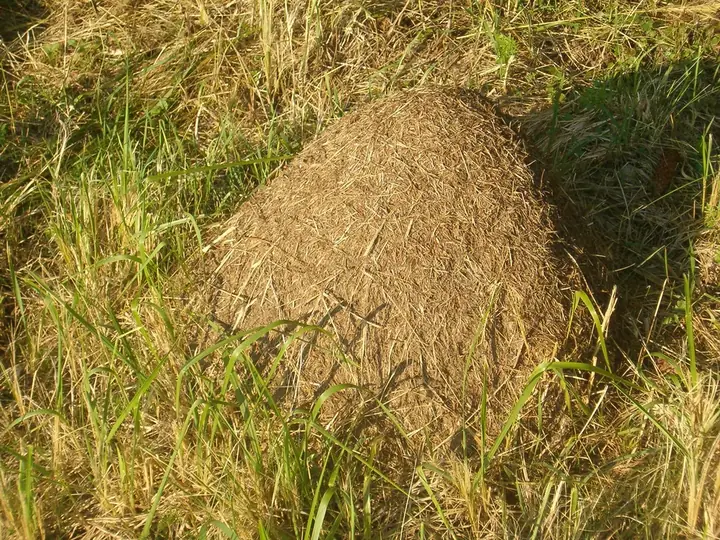 Stock photo: a narrow-headed ant nest in the Czech Republic – not the stolen nest. Photo: Lynxlynx1 / CC BY-SA 4.0 (via Wikimedia Commons).
 AI illustration – not the real police or ants. (Spot Gaz, our gorilla, hiding somewhere in this picture.)
Julia Balfour, the trust’s species recovery officer, called it a “significant loss for this species” and a crime “every bit as serious as illegal raids on wild bird eggs”. The most recent survey recorded 142 active nests on the reserve, “so every nest matters”. Laura Krusin of the charity Buglife warned that removing nests could have a “catastrophic impact on the population”.
 AI illustration – an imagined scene, not a real person.
Whoever took it, the joke stops there: the heath is a Site of Special Scientific Interest. PC Lucy Wyatt of Devon and Cornwall Police’s rural affairs team said SSSIs are “legally protected” and that it is a criminal offence to “intentionally or recklessly damage, destroy, or disturb the protected area”.
Seen anything suspicious? Call Devon and Cornwall Police on 101, quoting crime reference 50260284768.
Reported by BBC News (Britta Zeltmann), The Guardian and Buglife, from Devon Wildlife Trust.